SHACKLETON MEDAL 2026 // SHORTLIST NOMINEE: IN CONVERSATION WITH DOMINIK BAHLBURG
“When you look around at Antarctica it seems like the most hostile region on Earth. But then you look into the sea and it's full of life. That's still fascinating to me.”
The over-fishing of krill is a critical issue at the moment. The fact that your report’s come out now feels extremely timely, but you were farsighted enough to start it six years ago. What sparked your interest?
Ever since I was a student, I've been fascinated by the polar regions. I had the opportunity to go on a research cruise to Antarctica, and krill was the focus. Krill is fascinating. The organism itself is fascinating, but it's such an interesting research topic as well, because it connects to everything – to biogeochemistry, to top predators, to phytoplankton, to policy and decision making. I did my master's thesis based on this and that’s what kicked off my journey into the krill world.
What precisely drew you to the poles?
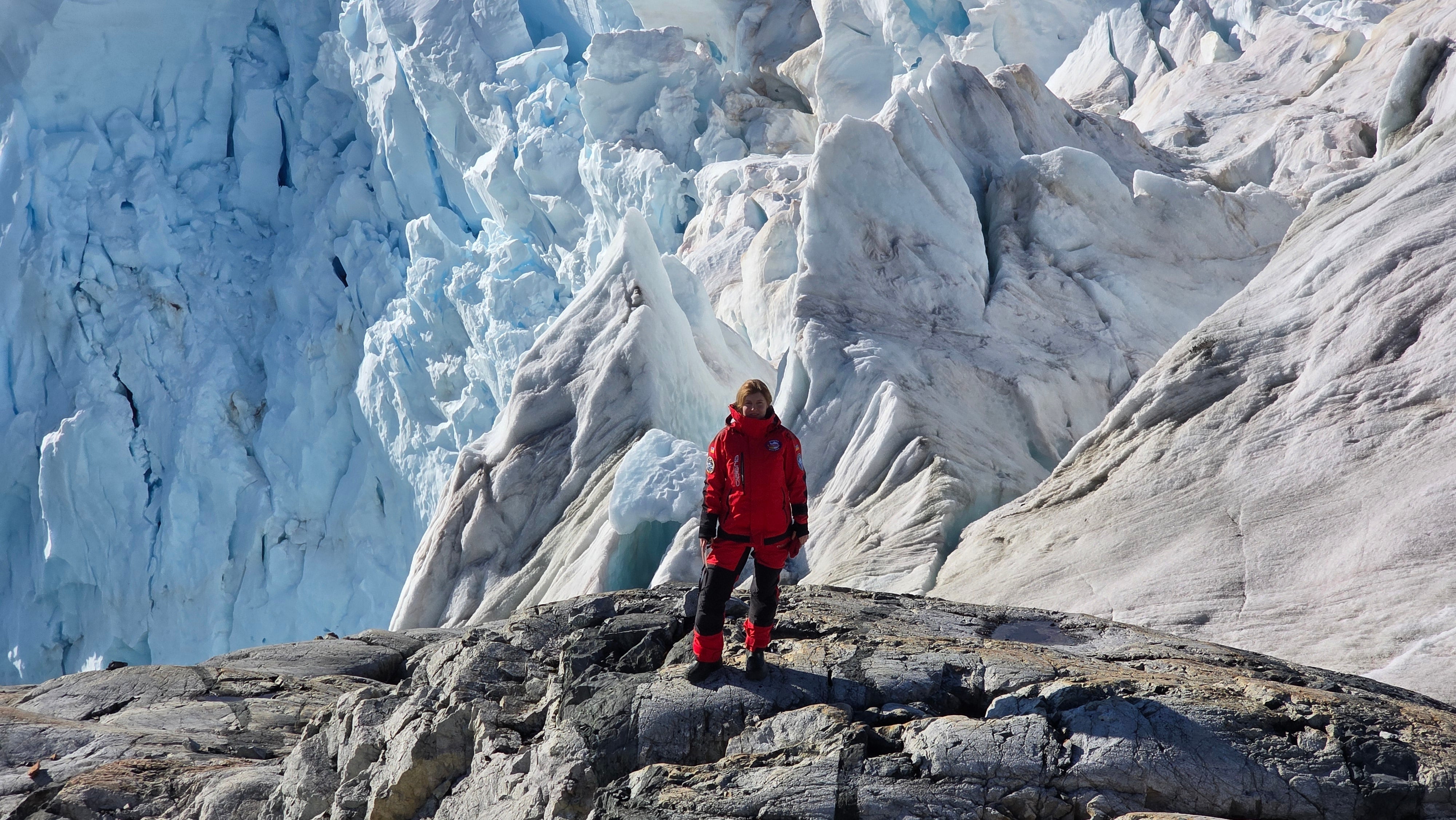
The harshness of them, especially Antarctica. When you are there, and you look around it, it seems like the most hostile region on Earth. But then you look into the sea and it's full of life. That's still fascinating to me. How can the system be so productive? How can there be so many whales, so many penguins, so much krill. Also so many kinds of fish. We don't talk enough about the fish there.
What been your greatest challenge working there, and how have you overcome it?
The biggest challenge for me is understanding the scale, especially with the Southern Ocean. The Southern Ocean is massive [it covers 21,960,000 km] and everything seems to be connected there, because you have the Antarctic Circumpolar Current, which constantly moves things between all areas of the Southern Ocean. So an observation that I make on a local scale may have been impacted by something that happened a few hundred or thousand kilometres away, five months earlier. One way we deal with this is by modelling, which gives you a good framework for testing your understanding.
Your specialism is marine bioacoustics, a fascinating area which is advancing very quickly.
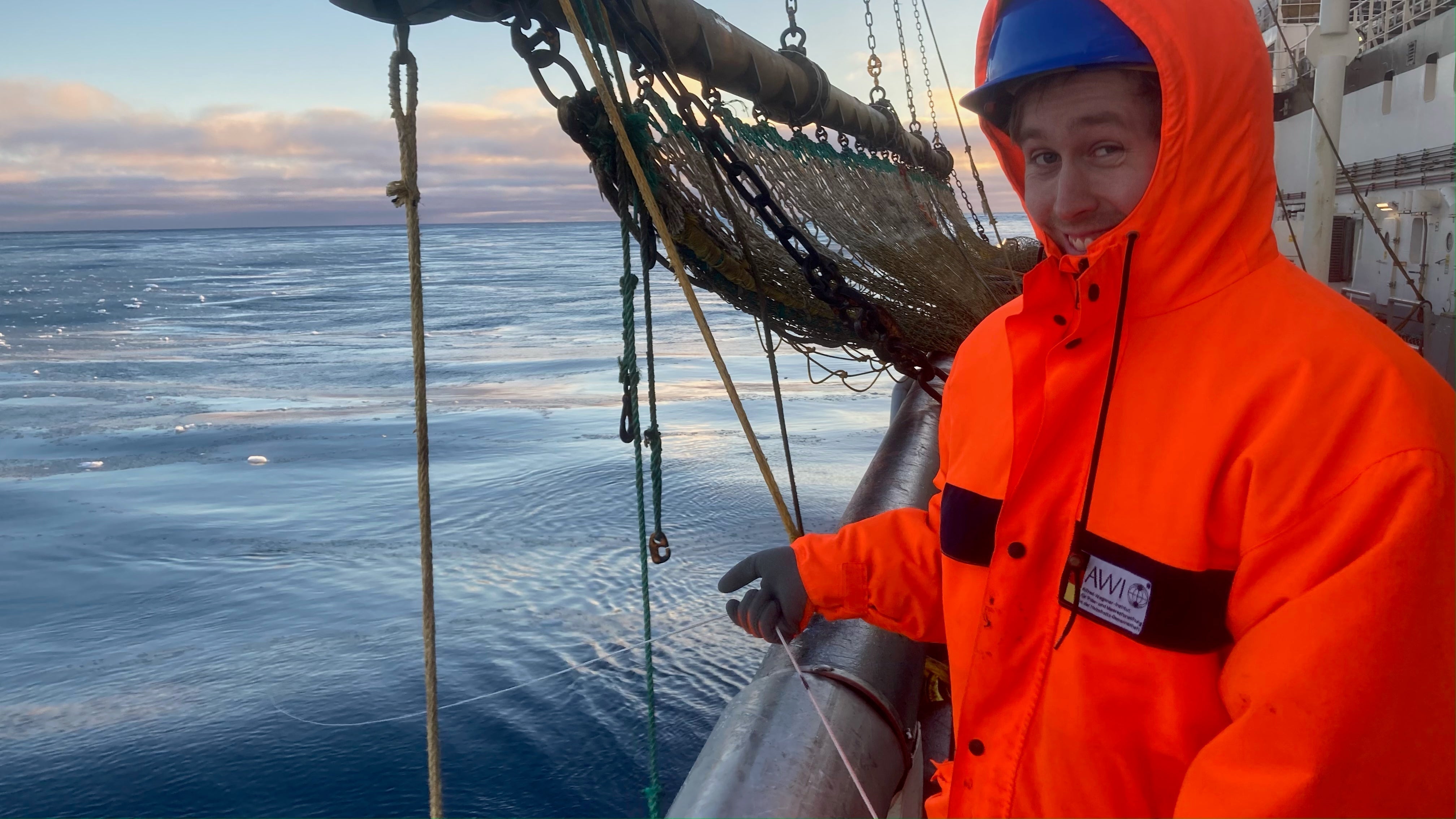
It’s not enough for marine biologists just to look into the water. Often we take samples with a net and or maybe we use a camera, but this will only have a range of a few metres because the light spectrum reduces very quickly under water. So using sound is a really nice way of getting proper sense of the biological properties of the entire water column.
Many people argue that artificial intelligence has created a real breakthrough in being able to analyse that sound. Would you agree?
Yes. I think the main advantage of AI is that it helps to handle the massive amounts of data that get generated. Back in the day there was less data, so there wasn’t so much of a need for super effective processing methods. Now, when you look at an acoustic picture from Antarctica, part of the challenge is identifying what noises come from krill, from whales, from penguins and so on. These days, this is all automated.
Describe what it’s like for you to be in the Antarctic.
It's surreal – like being inside a David Attenborough documentary. Often when I'm standing on deck and I look at the landscape I think, I don't belong here. This is so different to everything I know. The amount of wildlife is mind boggling. I've been on several other research cruises in the North Atlantic, to Greenland and around the Arctic, and they are all amazing. But nothing comes close to Antarctica when it comes to wildlife.

Are there any writers or filmmakers apart from David Attenborough who have helped you extend your knowledge and fascination with the Antarctic?
Actually the BBC and David Attenborough have done a lot to inspire me. So it was pretty amazing that when I was on my cruise to Antarctica in 2018, the BBC was on board for Seven Worlds, One Planet, filming the whales. I also read Apsley Cherry Gerard’s The Worst Journey In The World, which was fascinating, not least for helping me realise how what a massive difference modern equipment makes to expeditions now.
Your study involved listening to 30,000 hours of bioacoustic recordings, which is a huge challenge. Are you the kind of person who likes taking on tasks that sound almost impossible?
I would say I’m very curious and very open. I’m very focused on ecological questions, and I will use whatever tool seems best to answer them. So I'm not, for example, an AI expert, I don't have a formal background in machine learning. But these things are much more accessible nowadays. The project started with us watching YouTube tutorials on how to use it! It's not rocket science, to be fair.
The medal rewards ingenuity and innovation. How have you innovated or come up with a new angle for your work?
The most innovative part of our study was the data source – which was statistics from commercial fishing vessels. By scientific standards, the data quality is comparatively bad – so you can’t use it, for instance, to calculate the biomass of krill. But its huge strength is that there’s such a large quantity of it. Our breakthrough moment was when we realised that the data provided a snapshot of what was happening under the fishing vessel. It was a bit like a black box, which was fantastically useful for contributing to the public debate about what impact these vessels are having.
Your report has certainly attracted a lot of attention – not least from Antarctic Avengers, the organisation which is leading a major campaign to stop fishing in the Southern Ocean. Did you approach them, or did they find out about your study independently?
We haven’t connected with them at all! They featured our study in their material, but they haven’t talked to us yet.
Did your findings make you yourself want to start a campaign?
Yes. I am part of the German CCAMLR delegation (The Commission for the Conservation of Antarctic Marine Living Resources), so I have the privilege of attending all the Working Group meetings and Commission meetings. That means I can sit inside the room and advise our policymakers and bring, bring up my arguments. I think it’s great that there’s such public concern around krill fishing – there’s a very good reason to oppose it overall. On the other hand, I think it’s important to make sure the messaging around it is strongly science based.
What are your plans when you return to the Antarctic next year?
I’m going on an ecosystem survey around the Antarctic Peninsula, which is also a krill fishing hotspot. We will conduct scientific samples at the same time that fishing vessels are operating there, to get an idea of what parts of the krill population they are targeting. We will also be looking at where the krill predators are distributed in the region, and how that crosses over with where the fishing takes place.
The aim is to contribute this research to Antarctica InSync, the global initiative in which several nations are coordinating and synchronising their Southern Ocean scientific activities. This allows us to get a much bigger picture of the situations we are investigating. Within the context of CCAMLR, Professor Dr Bettina Meyer – who's my boss – and I have been pushing for an InSync project on how the krill fishery impacts on the Southern Ocean ecosystem. At the same time there will be research into krill predators – penguins, seals and whales, and we will take data from the fishing vessels once more. Other nations will also conduct their own krill surveys. With their help we can put the different parts of the puzzle together.