How to Layer For Mountains
Adventures that take you to altitude require a specific approach to layering so that you can move fast from balmy conditions at the base, without overheating, and up to the breezy, chilly heights where conditions can shift suddenly. Here's what you need to know to build your own adaptive layering system to stay protected and dry and extend your range…
Shackleton's Guide to Adaptable Mountain Layering
The mountains may be an adventure playground but weather systems move through them with more energy and unpredictability than the lowlands, so it pays to be prepared with a robust yet lightweight layering system.
The higher you go in the mountains the greater wind speeds can become and with each 1000m of vertical climb the air temperature drops by up to 10°C (50°F). This means you will need to tune your layering system to cope with the unexpected extremes of wind, cold and precipitation. A balmy 14°C day on the valley floor can become a sub-zero one at 1000m after wind chill is added into the equation. Follow these three steps to build your perfect system.
1. Technical Base Layer
The foundation of any layering system is the base layer, and for mountains you will need to get technical and choose something with high-performance fabrics that readily wick moisture from your skin, efficiently regulate body temperature and dry quickly.
There may be times of very high output activity, when you are rock climbing for instance, combined with long periods of inactivity, such as belaying a climbing partner, or stopping for lunch on a long ridge traverse. And in the summer temperatures at even high altitudes can be scorching, which is where specific apparel such as Shackleton's Salient Merino sun hoody can provide UPF 50+ sun protection while being light enough to prevent overheating.
You should select a comfortable base layer that fits fairly close to the skin because this maximises moisture wicking and reduces drying time. Wools like merino are superb natural materials for this because they're also odour-resistant, while synthetics can be ultralight and extremely durable. For high summer temperatures, a short-sleeved base layer combined with sunscreen can be preferred and Shackleton's Supernal Merino Short Sleeved T-Shirt would be a good fit.

Finally, cotton T-shirts work for the pub but they're an inappropriate choice as a technical layer because they don't manage moisture well and are very slow drying, which puts you at risk of hypothermia in extreme conditions. Look for a blend of natural and synthetic fibres to get the best of both worlds in a garment that combines durability with performance and will stand the test of time, such as Shackleton's Lister Long Sleeve T-Shirt.
2. Lightweight Midlayer
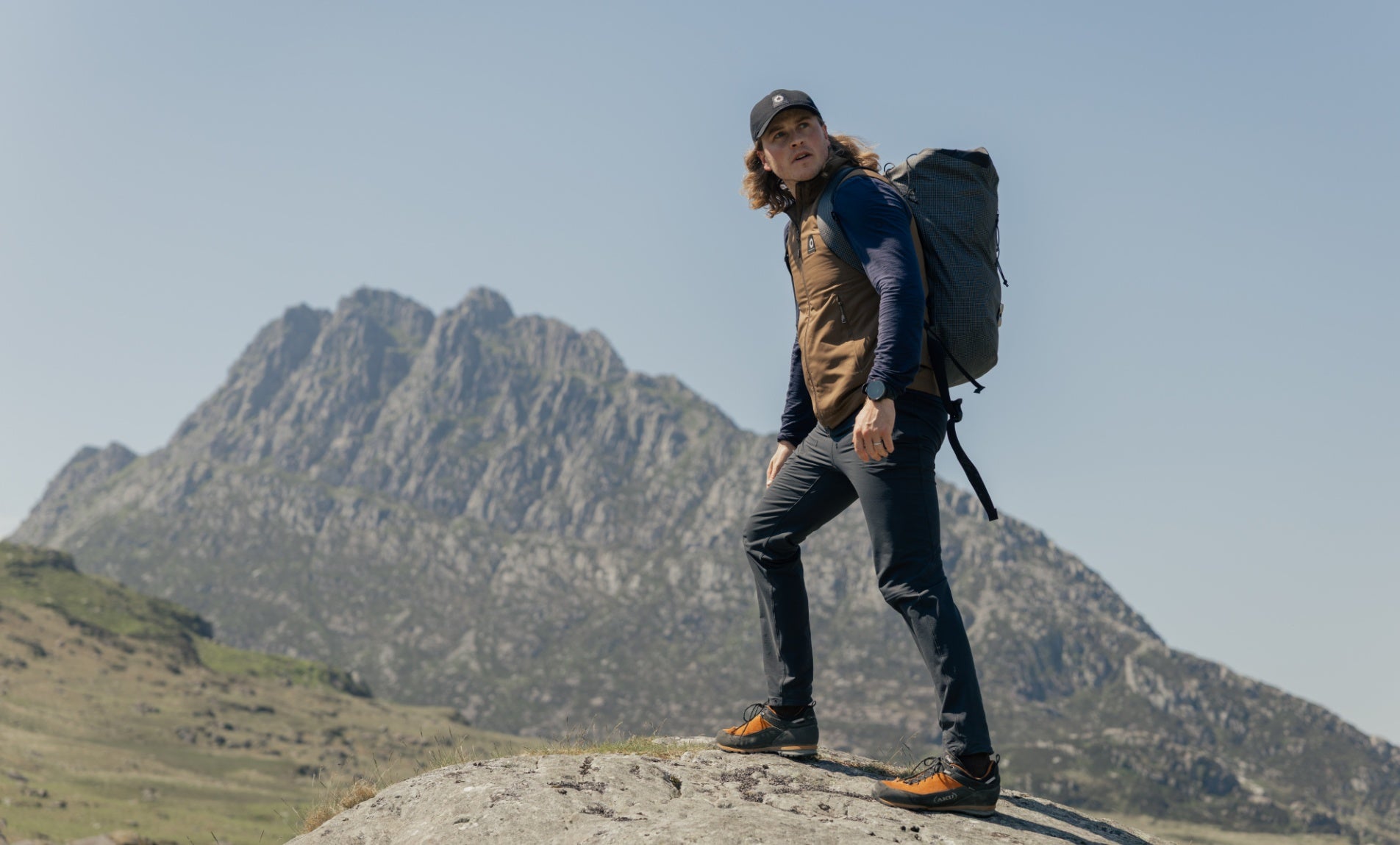
The fundamental job of a midlayer is to provide breathable insulation and that still applies in the mountains. However, choosing a midlayer built with a windproof fabric supercharges the adaptability of your layering system because it can also perform as an outer layer during high-output activity, or at lower altitudes where the air is warmer and a three-layer system may be overkill.
Mountain midlayers need to breathe with you to transport the water vapour from your base layer and through the microclimate between your body and your outermost layer. Shackleton's softshell Erebus Active Jacket and Hawkes Active Gilet are loaded with perforated Clo active insulation that is 30% more breathable than regular insulation. They're windproof and engineered for climbing mountains, which makes them ideal midlayers for any season, and even dry-weather outerlayers in the summer and shoulder seasons.

There are other options when it comes to breathable, lightweight mid-layers and the line between a warmer base layer and a midlayer is a fine one, as Shackleton explorers have found when sizing up our Nelson Merino Base Layer and wearing it over a thinner base layer for high output activities like downhill skiing.
At the other end of the scale, providing even greater warmth, premium lightweight down jackets including Shackleton Halley Ultralight Down Jacket utilise high-performance windproof fabrics like Pertex® Quantum, with durable, tightly-woven threads that are coated with a DWR so that they shed some moisture. Depending on the season and overall temperature these can be a good choice for a midlayer, and occasional outer layer, within a three-layer system.
3. Protective Outer Layer
Storms can suddenly roll into the mountains, even on days that start out bright and blue, so your waterproof outer layer needs to be adaptable and durable. A lightweight, breathable, packable and yet robust waterproof hardshell is the natural choice, such as Shackleton's Markham Vapour White. These hardshells allow you to fine-tune your preferred level of insulation through your choice of midlayers.

Look for high-performance full seam-sealed hardshells with waterproof membranes that have lab-tested specifications. The Markham Vapour White has an excellent waterproofing rating of 20,000 Hydrostatic Head and a high breathability rating of 5.39 RET. Features such as 3-layer fabric, Storm Hoods and YKK Aquaguard® zips improve protection against wind and rain while ripstop fabrics will help your garment last longer and prevent tears that could render it useless, just when you need it the most.
Choosing a breathable outer layer is crucial to performance in the mountains, where you often need to move fast to cover ground before the sun sets, but still need the protection of a windproof, waterproof layer. For this reason, vents that can manage moisture and heat while still keeping the garment on are popular. Shackleton Quest Hardshell Jacket comes loaded with underarm zips for even more radical heat management and has been optimised for packability and use on the move while still being a highly protective 3-layer jacket.
One essential piece of safety kit to carry in the mountains is a packable, insulated layer that you keep stowed in your backpack for emergencies and any time you need to be stationary for long periods. It should be roomy enough that you can pull it out of your pack and put it on over everything else, or alternatively under an outer layer shell if it's raining. Down jackets including Shackleton Rothera Hooded Down Jacket are ideal for this purpose because of their unrivalled warmth-to-weight ratio, which synthetic insulation has yet to beat, and for even greater warmth look to Shackleton Fuchs Down Jacket.
Lightweight, waterproof gloves and some headwear are excellent additions to a mountain layering system because you never know when you are going to need some additional protection from the elements. Headwear can also protect you from harmful UV rays and windchill.
By striking the right balance between light weight, warmth and protection in your mountain layering system you'll ensure your mission into the mountains is as successful as you dreamed while being safe in the knowledge that you're prepared for whatever the weather throws at you.
Written by Matt Ray