POSTCARDS FROM THE EXTREMES
Northern Sweden & the Kungsleden
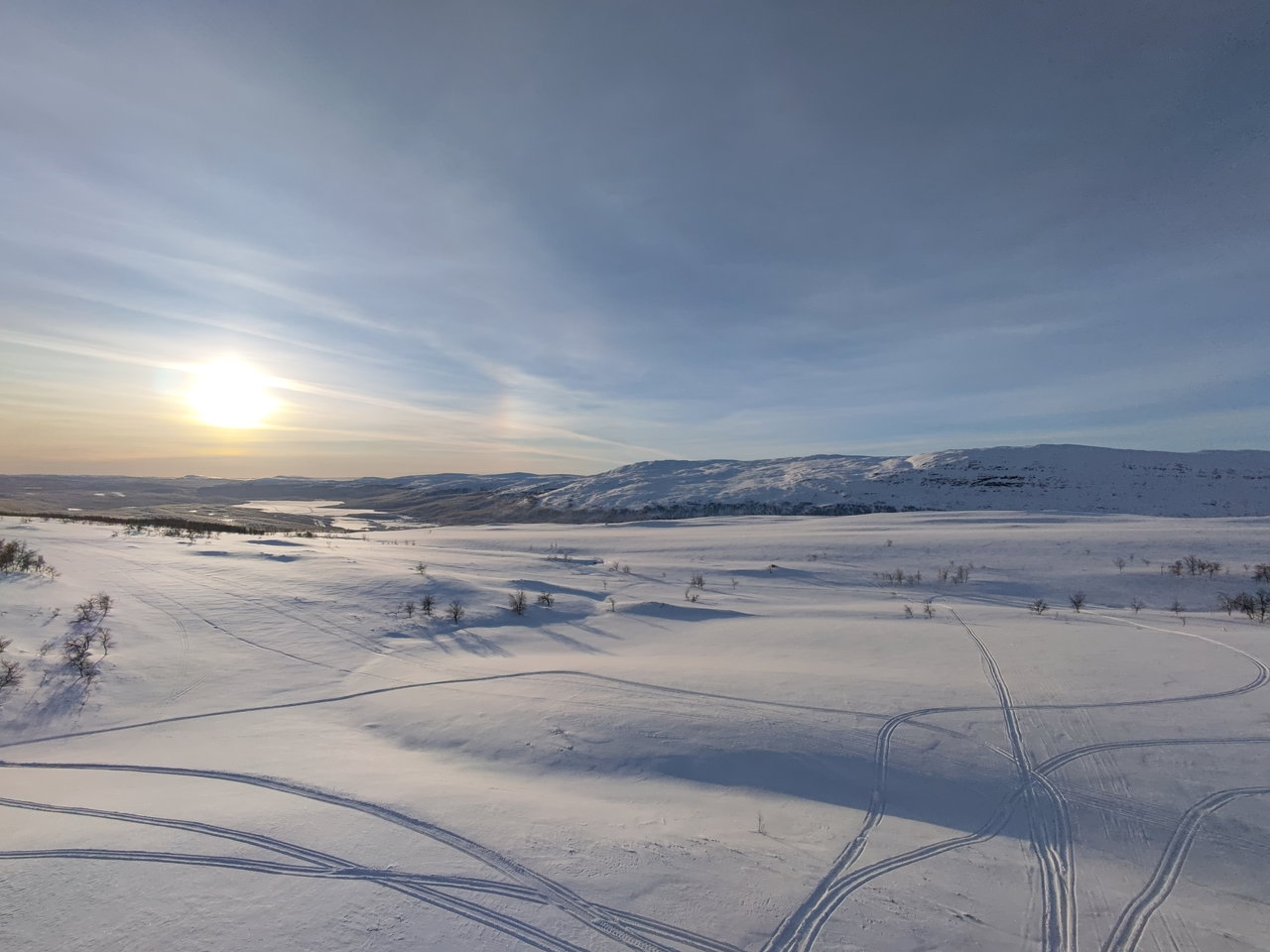
This recce was undertaken by the Shackleton Challenges team - an assessment of terrain, conditions and logistics for a potential future Shackleton Challenge. The objective was not distance alone, but understanding: how this landscape behaves in winter, what it demands of those moving through it and whether it offers the right balance of access, exposure and progression.
Explore Shackleton Challenges
We begin in the small town of Kiruna, surrounded by low, snow-covered mountains. It made headlines a few years ago when the church was moved across town - the entire building transported on the back of a lorry. The place itself - named for the Sámi word Giron, meaning ptarmigan - is better known for its iron ore mine, the largest in the world.
The seam runs diagonally more than two kilometres underground. As it is extracted, the ground above shifts. Over time, the mountain is collapsing, and the town is moving with it - prompting the relocation of historic buildings and the gradual rebuilding of the rest. Kiruna’s railway was built to transport raw materials west, across the Norwegian border to Narvik - a port on an ice-free fjord, operational year-round.
That same line made Narvik strategically critical during the Second World War. In 1940, it became a focal point of fighting, and the museum in the town records the experiences of soldiers and civilians involved. Driving back towards Sweden, we pass through the surrounding mountains, where Norwegian forces fought alongside British, French and Polish troops.
It is this railway, running from Kiruna to Narvik, that we will later take to Abisko to begin the second phase of the expedition. Before that, we head south by road. It takes five hours to cover little more than 100 kilometres as the crow flies. There are no direct routes across the mountains. In winter, some roads are cleared, while others remain covered in snow and ice - single tracks where you drive down the centre, aware that meeting another vehicle would require careful negotiation.
STORA SJÖFALLET
Stora Lodge, deep in the national park, can only be reached by a narrow road, one which ends abruptly, about 20km further on, with nowhere else to go.
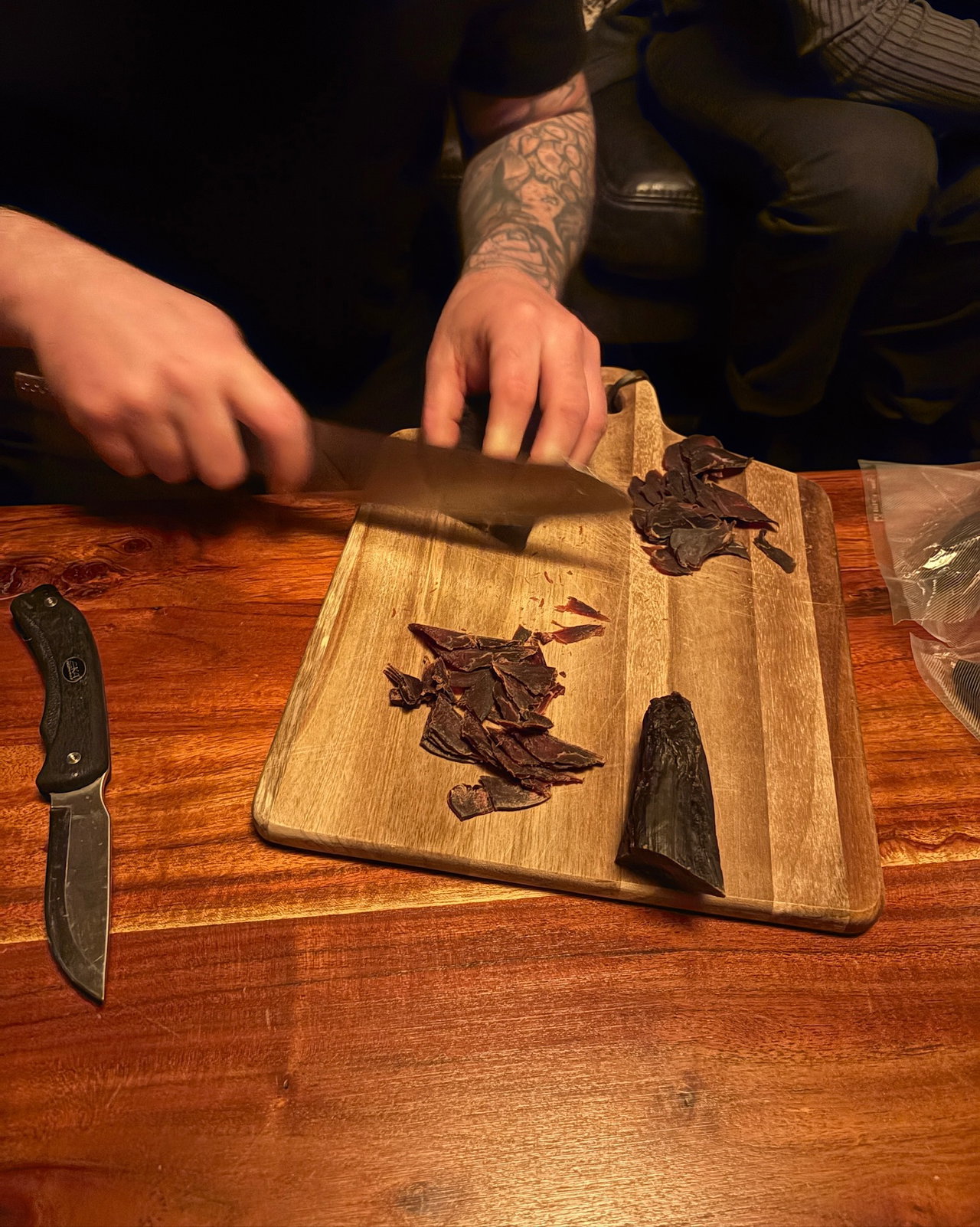
We sit by an open fire and chat to some locals. Nicholas is keen to share his smoked reindeer - most Swedes hunt and dry their own meat and fish. He cuts thin slices with a knife from his belt, and eats, accompanied by a glass of red.
He’s heavy-set, looks like he can handle himself, and is covered in tattoos. But he is friendly and welcoming and keen to share everything that is best about Sweden.
With a sparse population, especially in the north, what is best is the space. That and the landscape. Surprisingly, they are culturally quite different from Norwegians, despite a long land border. As soon as you cross into Norway, it is dramatic and grey, with more cars on the road. Back in Sweden, there is little to disturb the endless forest and snow, and low hills.
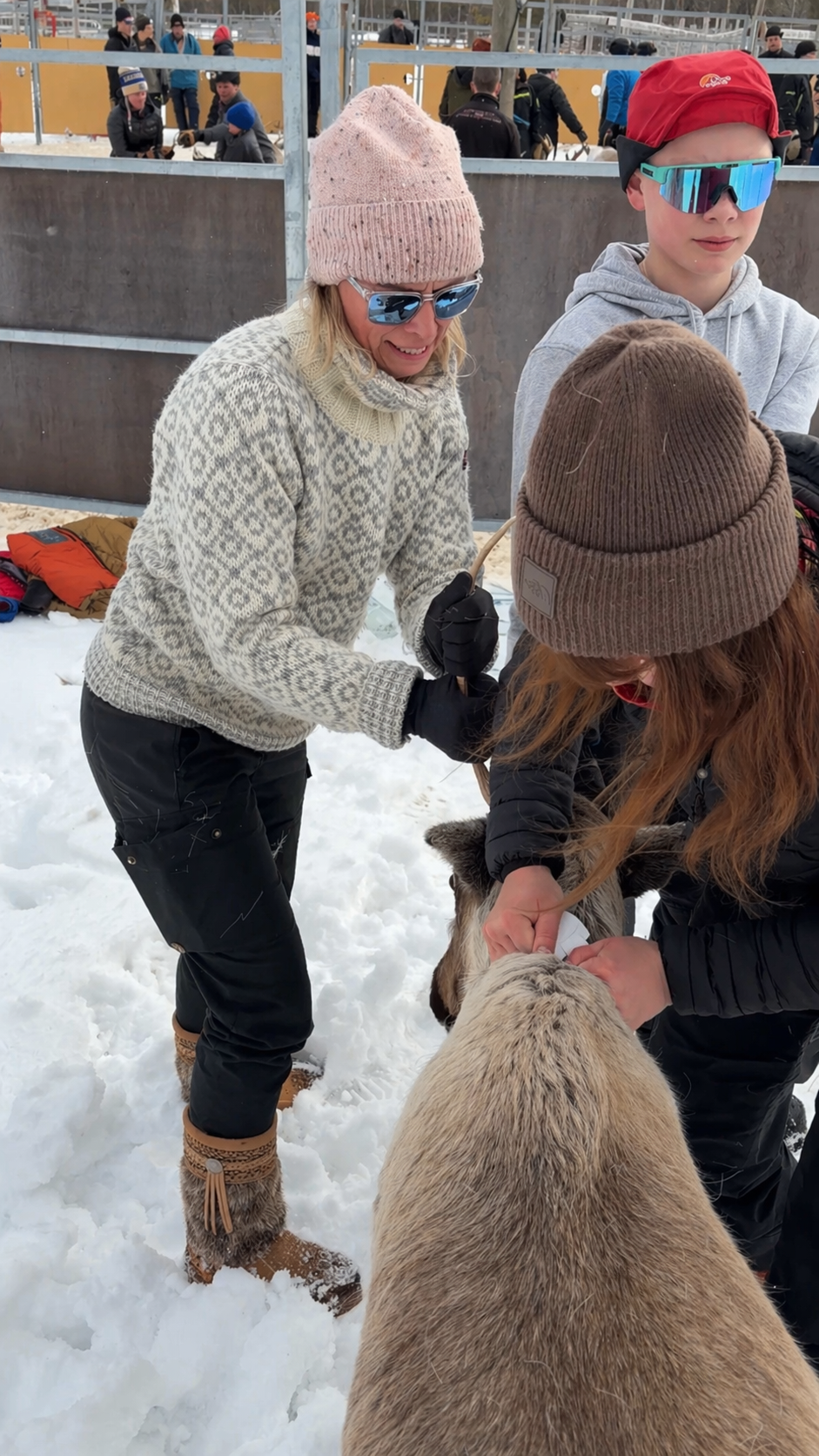
The reindeer here are part of a system that has operated across this landscape for generations. One afternoon, we are taken by a Sámi herder, Anna, to a corral hidden just off the road - a working enclosure where families sort their animals ahead of the spring migration.
Out in the forest, thousands move together through the trees, the sound of hooves soft against the ground before they are guided into the pen. Inside, the pace shifts. Herders step forward to identify their own - not by number, but by ear markings and instinct - catching them by antler or flank and releasing them into separate enclosures. Children work alongside adults, learning as they go. Decisions are collective, shaped by experience and by the condition of the herd.
Anna explains it simply later that evening: “It’s in my blood.” The relationship runs both ways. The herders follow the migration routes, supporting the reindeer through calving and movement. In return, the animals provide meat, skins and material - a system of reliance that has held for generations.It is physical, precise work, and being invited to witness even a small part of it feels rare.
Nicholas is a keen fisherman and offers to take us ice fishing the following day. Before that, we head out on skis across the frozen lake beyond the dam.
The lake stretches for perhaps 20 to 30 kilometres in length, though it is narrow by comparison. We cross towards the far shore in still air, with visibility extending across low ridgelines and forest. The only sound is the steady grip of skins against the thin layer of snow covering the ice.
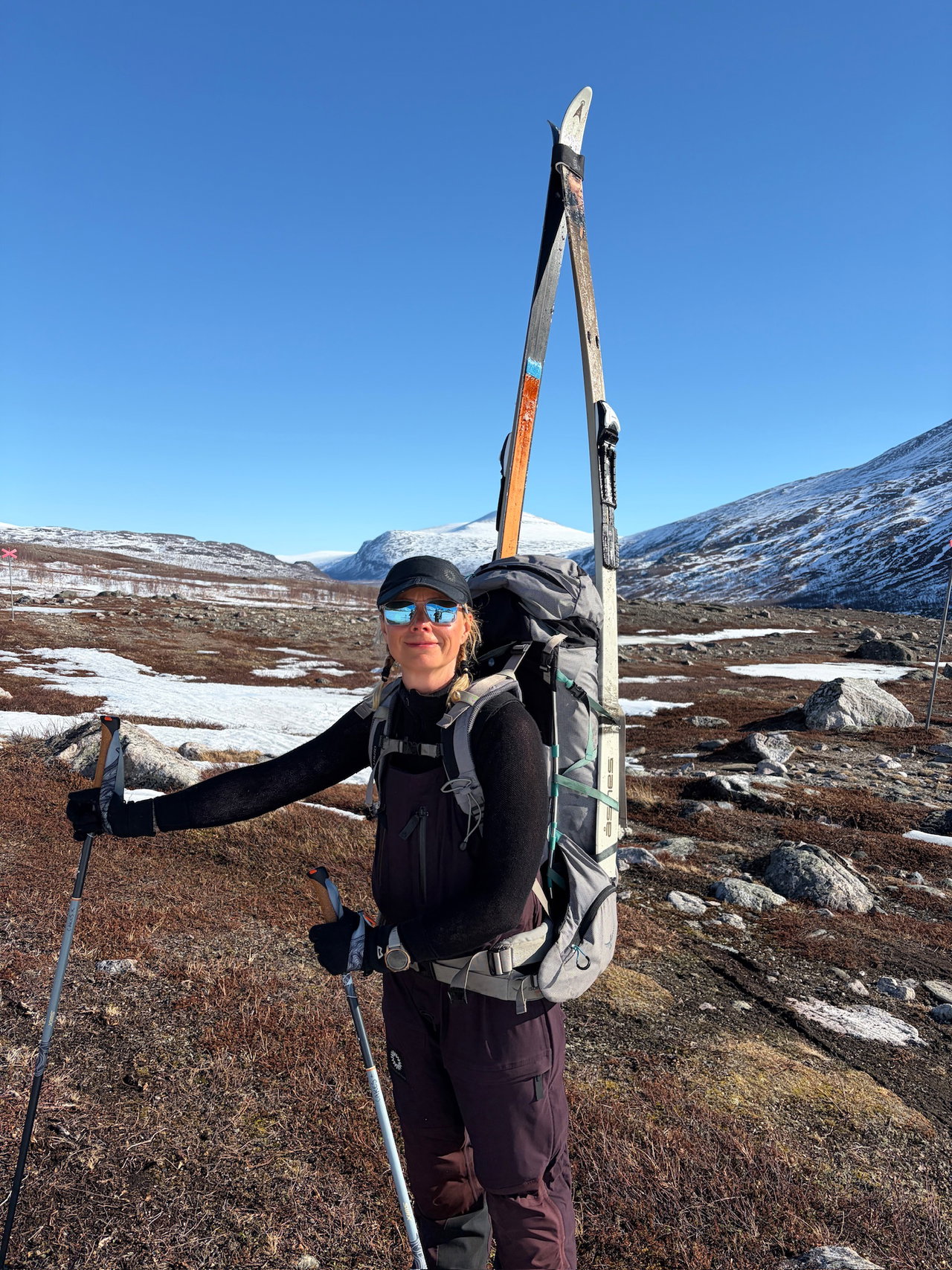
At the far side, we climb off the lake and stop among a stand of pine. Fresh moose tracks cut through the area, but we see no animals. There are no other people. Early signs of spring are beginning to show - heather breaking through in rust-red patches, warmth building where the sun reaches the ground.
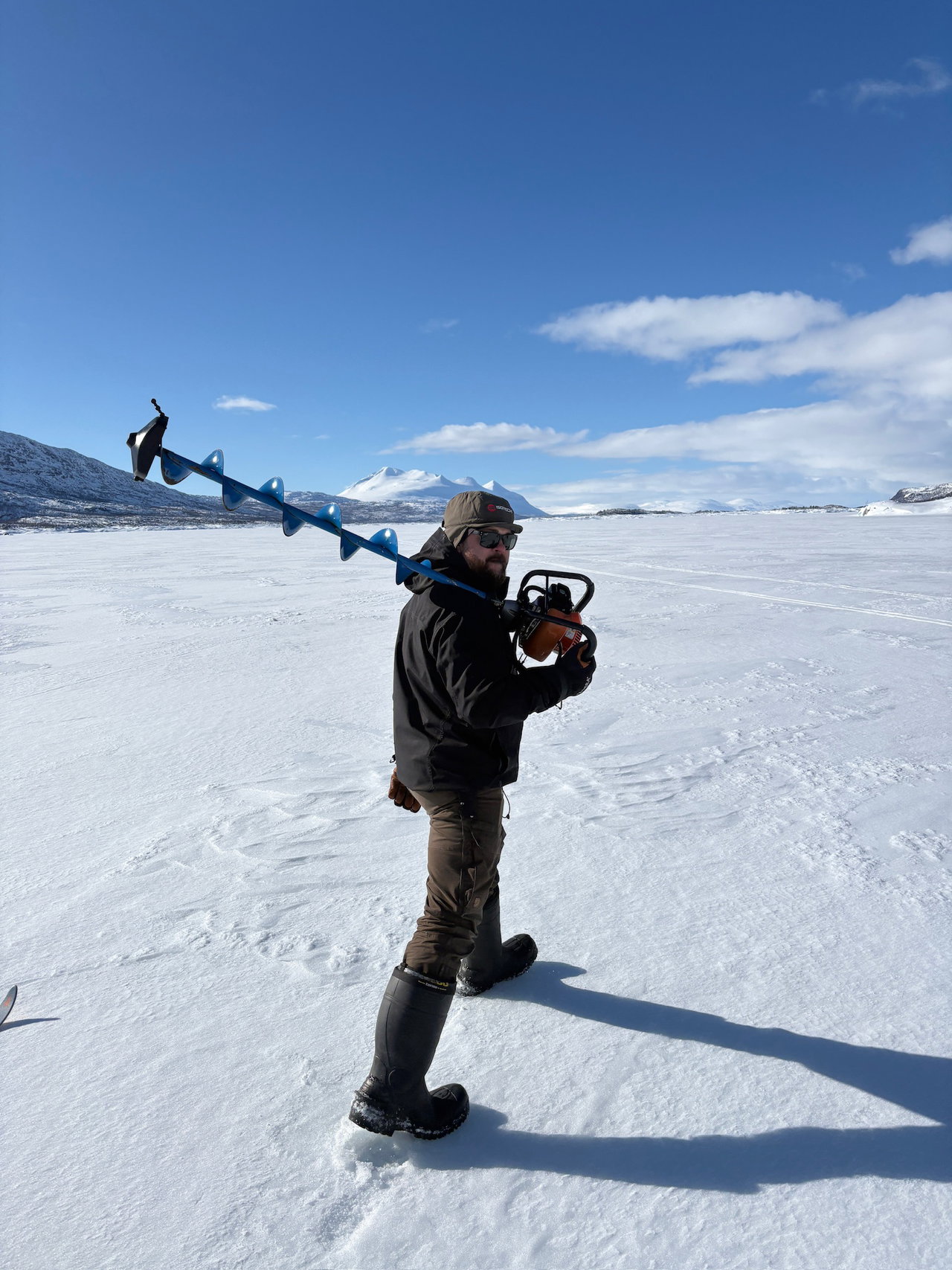
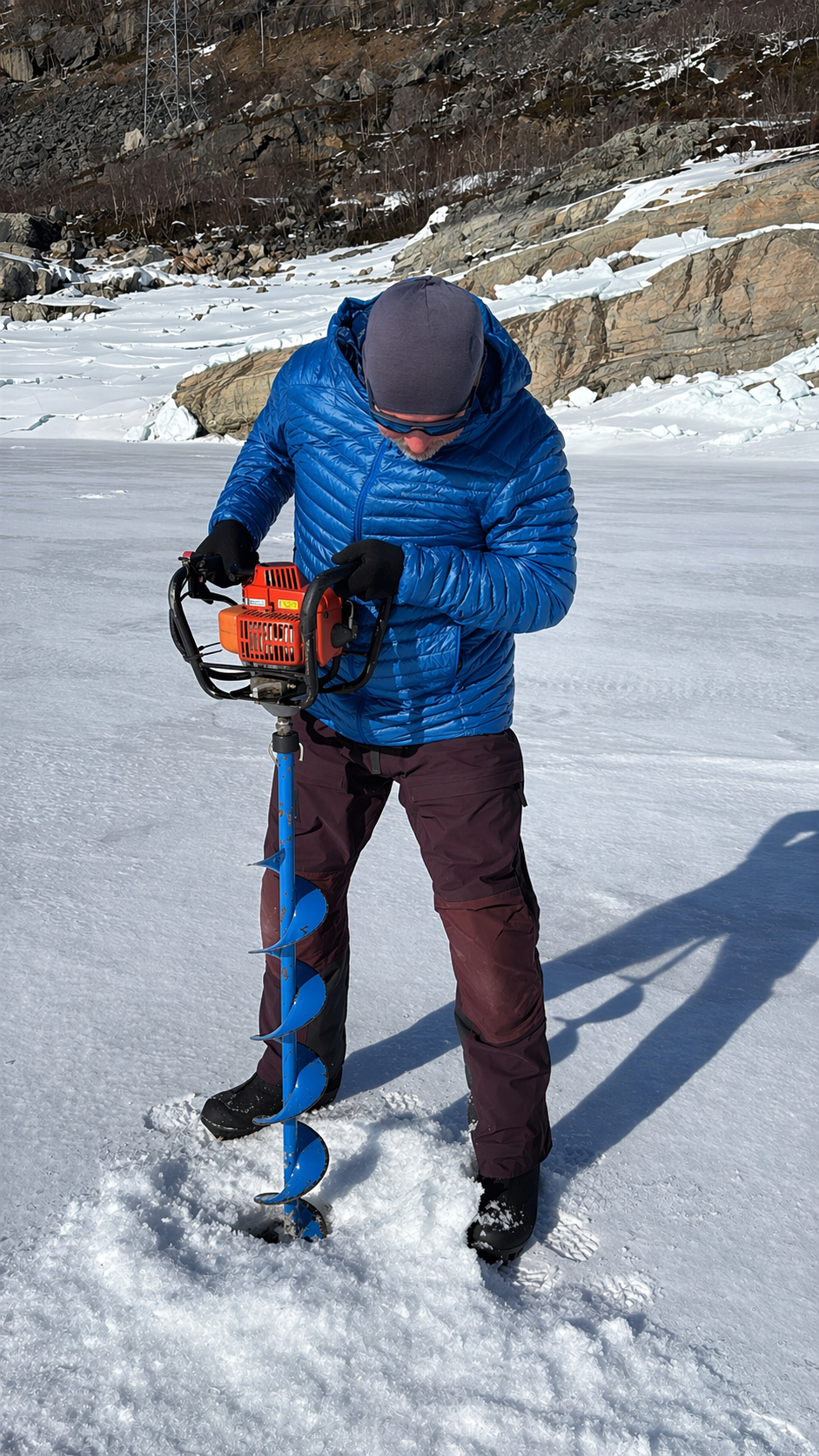
Later, Nicholas returns, lifting a petrol-powered auger from the back of his truck and carrying it onto the lake. His girlfriend, Stine, follows with rods and tackle.
He drills through the ice methodically, opening hole after hole across the surface. We are handed rods fitted with small metallic lures and shown the process - lower the line, wait, and see if Arctic char rise from the water below.
He continues drilling, perhaps fifteen or twenty holes in total, working steadily across the ice.
We catch nothing.
He seems more disappointed than we are, suggesting that it is better earlier in the day and offering to return at 04:00 the next morning. We are already due to leave, but the experience holds its own value - standing on the winter ice, watching the light shift and waiting.
THE KUNGSLEDEN
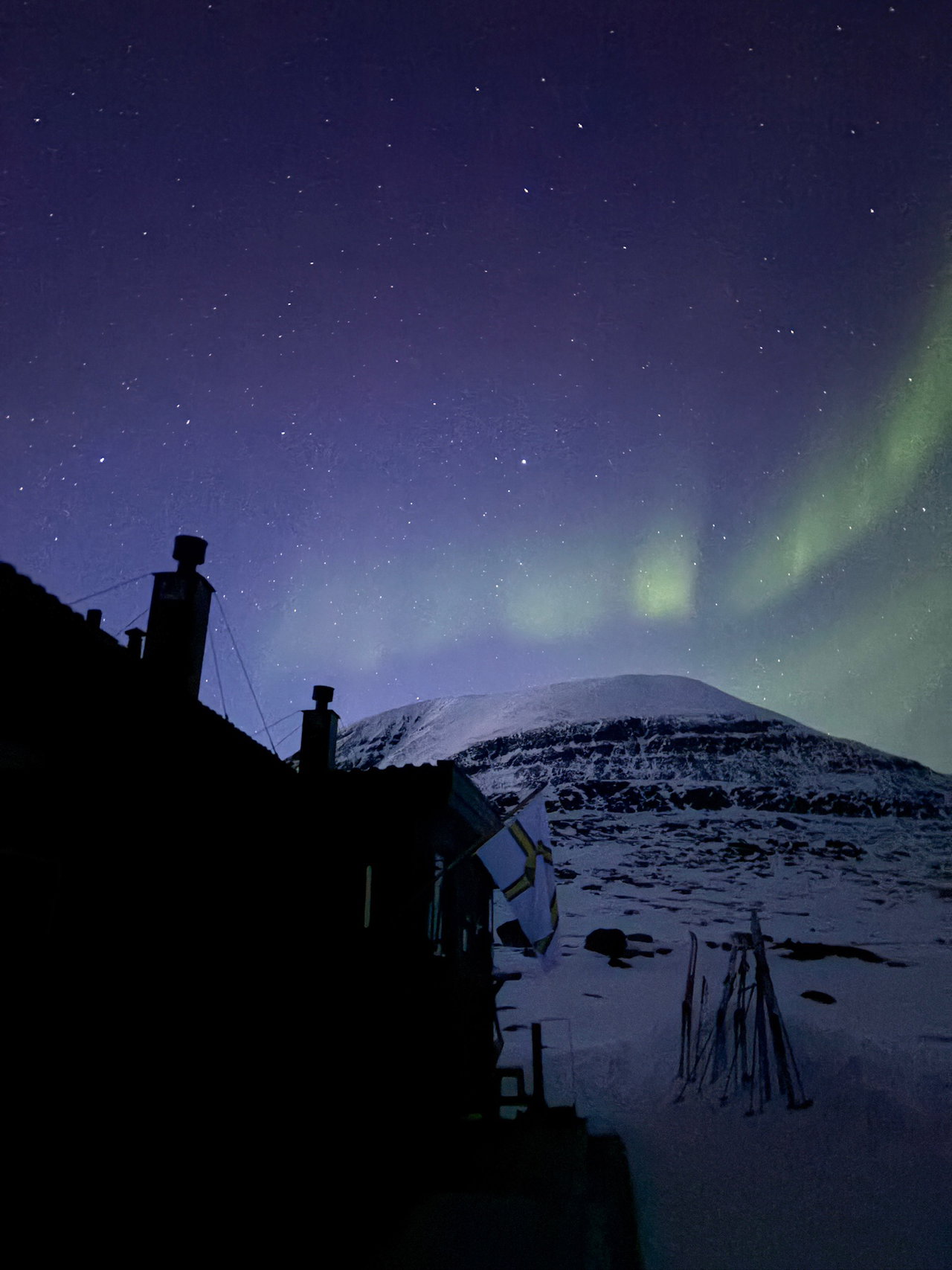
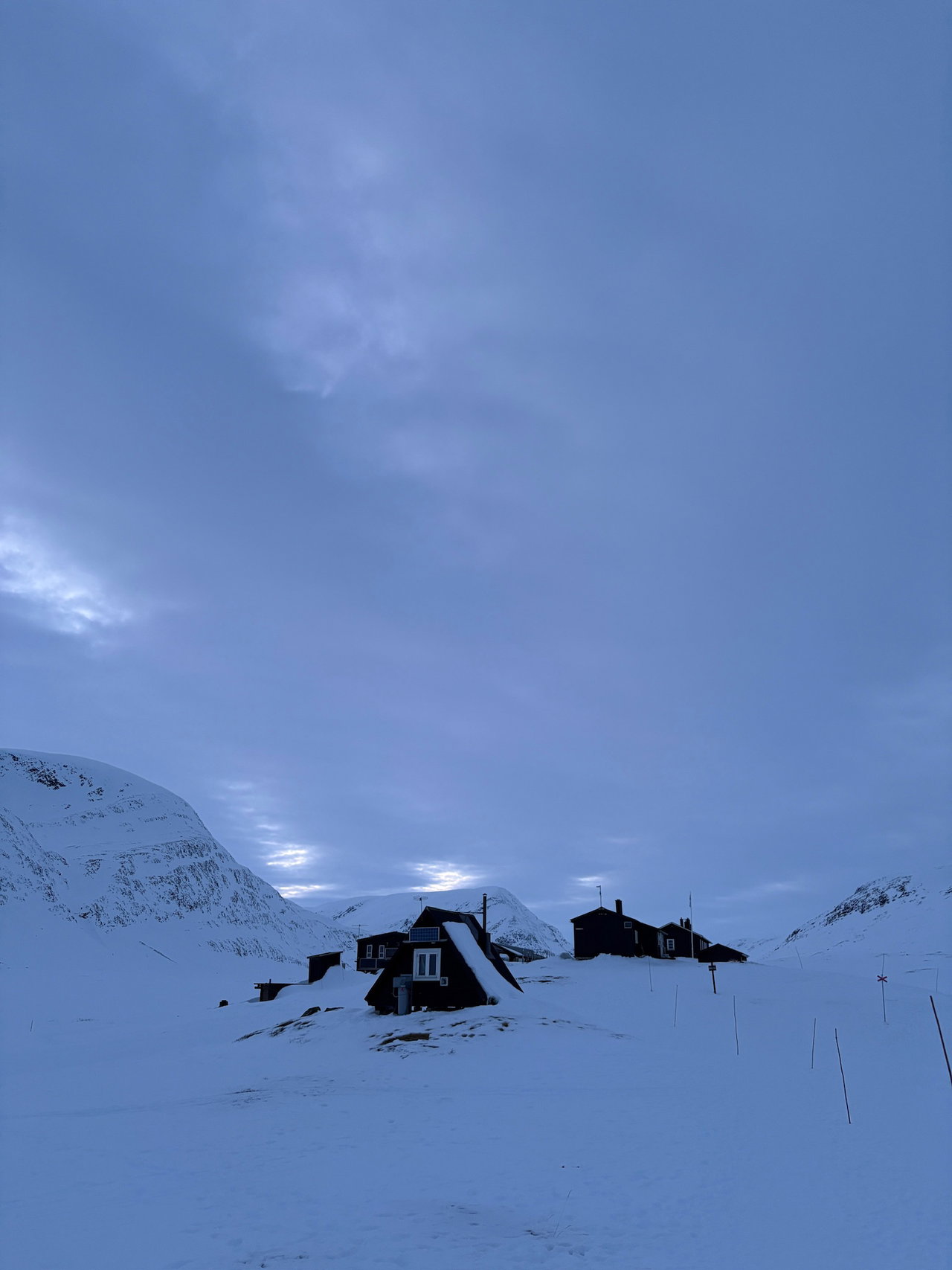
Each night on the trail, the ptarmigan chatter long after the sun has dipped behind the mountains - long into the blue hour, when light still lingers across the snow and ice.
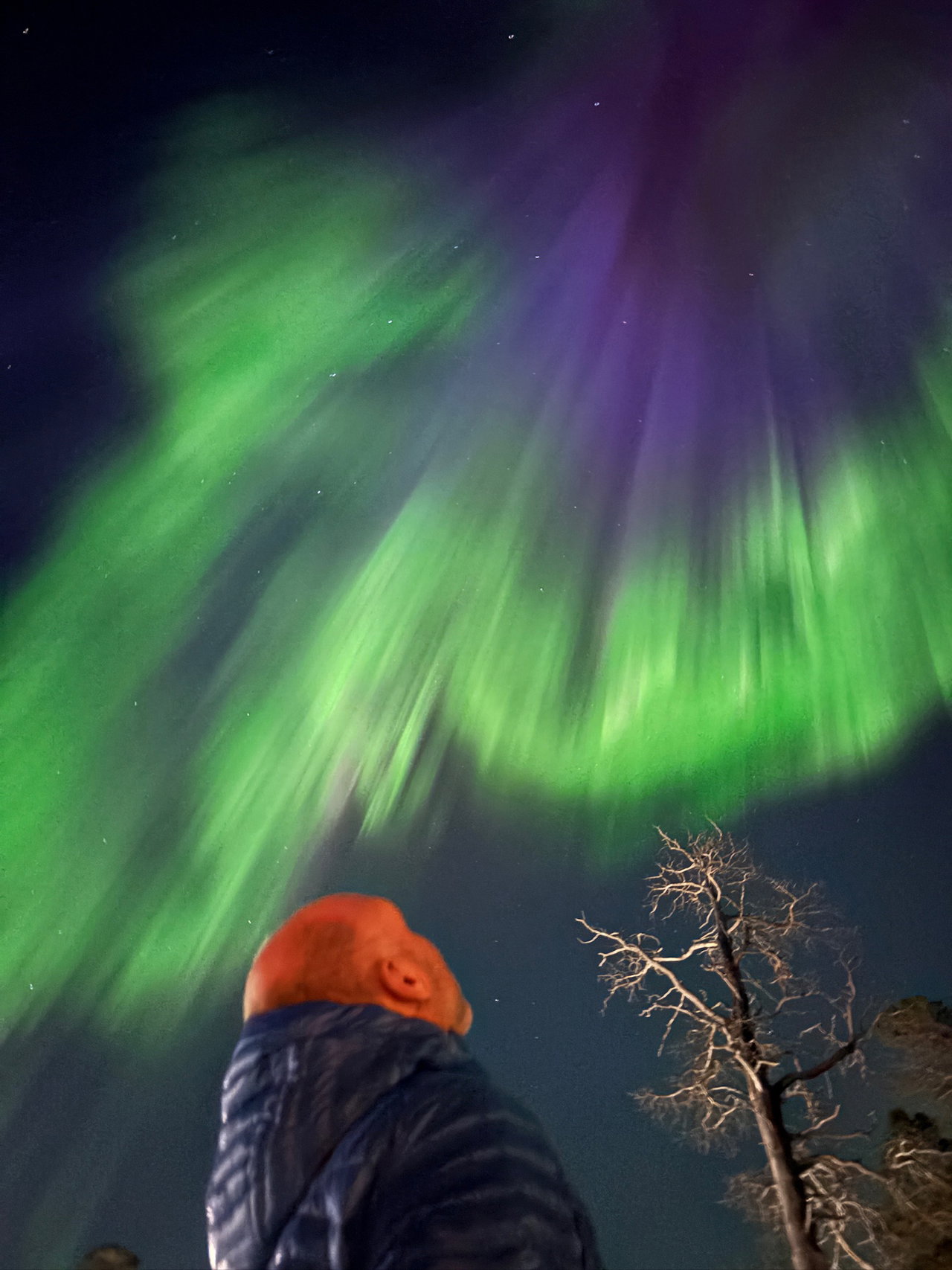
But on our final night, as we look up at the northern lights sweeping slow arcs across the sky, even they are quiet. For a moment, it feels as though the landscape is holding still.
The Kungsleden - the King’s Trail - was established in the early 1900s to showcase the lakes, valleys and mountains of northern Sweden. In winter, it becomes something more pared back: a marked route through terrain that demands steady progress rather than isolated effort.
Over the previous days, we have skied through birch forest, across frozen rivers, and past Sámi settlements, empty for now while the reindeer follow their migration routes. The land shifts gradually - wide valleys opening between ridge-lines, sections of wind-scoured ground giving way to softer snow.
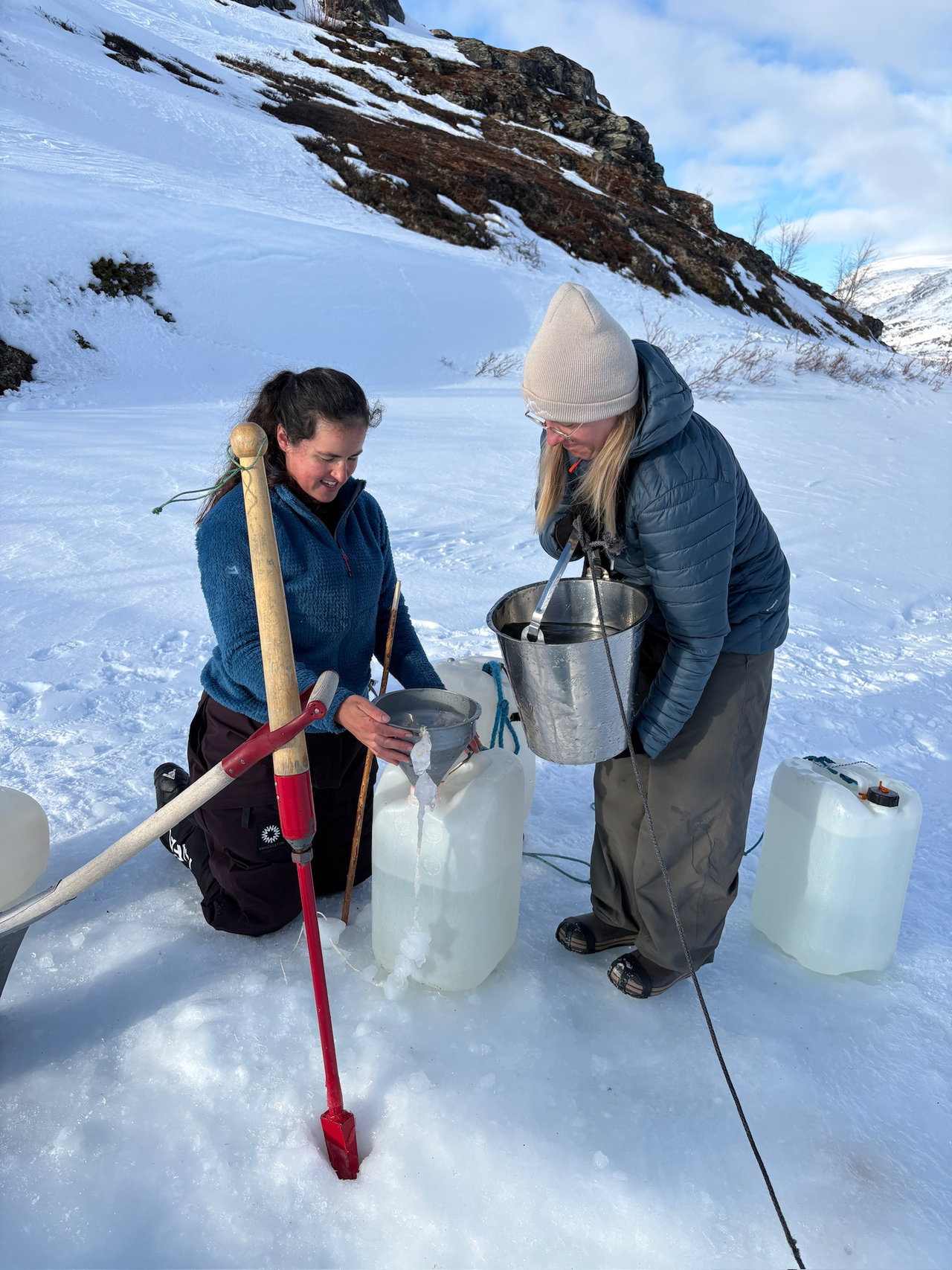
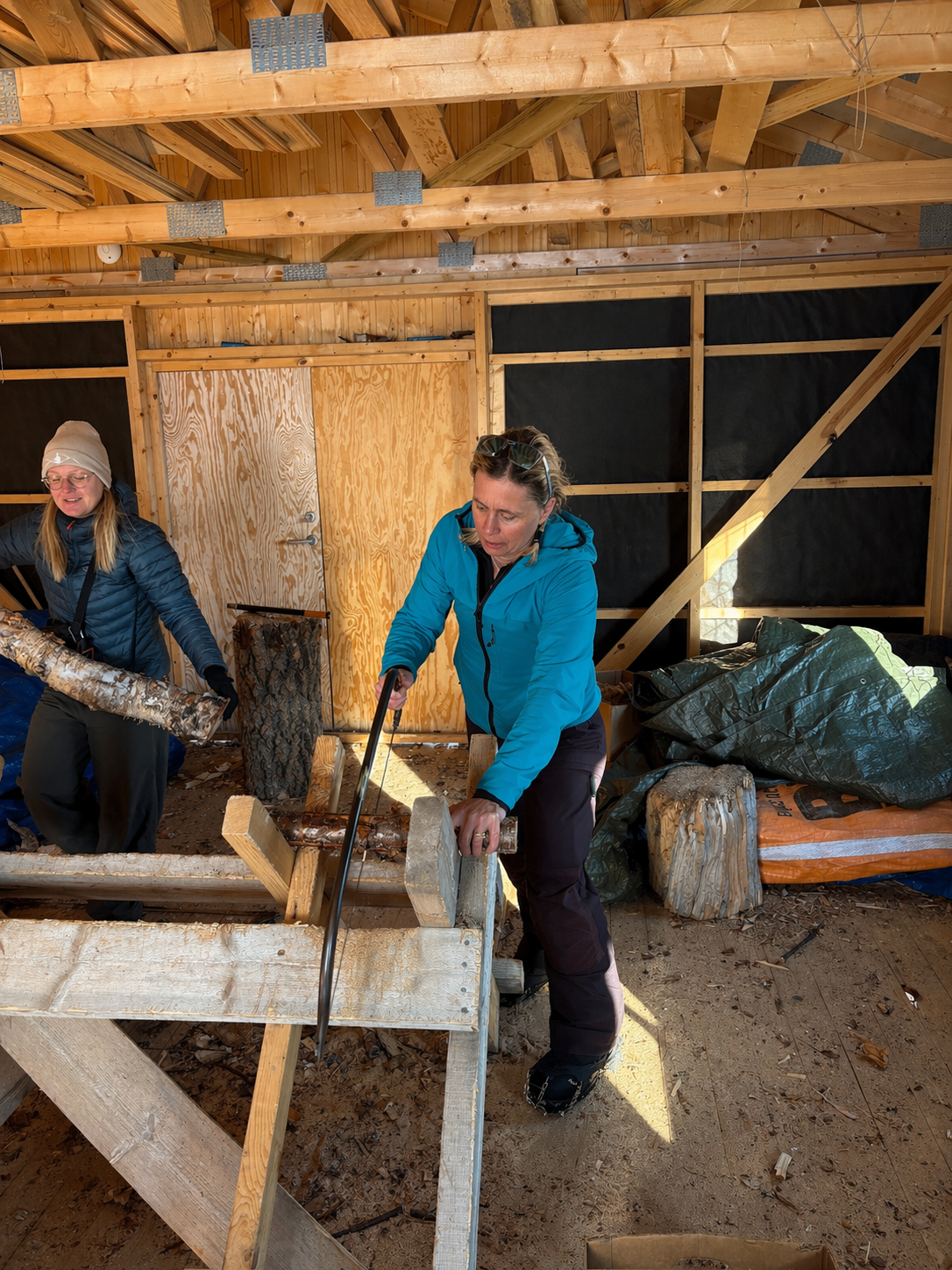
Each evening, we arrive at a hut and fall into routine: collecting water, chopping wood, preparing food. The hut wardens greet each arrival with the same quiet consistency, managing a steady flow of skiers passing through.
Other travellers reappear along the route, and over time, a loose familiarity forms. Conversations repeat - about the day’s conditions, what’s for dinner, how well people slept - small exchanges that begin to matter more in the absence of distraction. Without a signal, attention settles elsewhere. On the terrain. On the rhythm of movement. On the simplicity of the routine.
Six days and five nights later, we reach a larger cabin with power, light, and signal. The shift is immediate. It feels like a return, though not entirely a welcome one. There are new groups - day skiers, shorter routes - but we still find ourselves sitting with those we have travelled alongside, the pattern holding for a little longer.
The final day is a skidoo transfer, organised by local Sámi, to a bus back to Kiruna.
It feels, at once, like no time has passed at all - and like we have been away long enough to understand what this landscape demands, and what it might offer.
"It is in our nature to explore, to reach out into the unknown"
Sir Ernest Shackleton
